Ok hands up – who goes for the coffee pot first thing every day?? Yeah, me too, I have to admit I do love my coffee. Back home there was nothing better than coffee with cream and sugar while I did my puzzle in the morning before going to work. Here, cream is a luxury and usually tastes as if it’s about to become sour cream, so I have learned to do without. Actually I didn’t even have coffee for the first three months I was living in South America. But when we came to Apuela I got myself an electric burner so I could make small meals as well as tea and coffee in the comfort of my room.
Now I know if you’re like me a fresh cup of coffee is grinding the beans yourself and making the brew right away. The only way to get fresher is if you go to a place where they roast it. I remember walking in the neighbourhood of Kensington, Calgary, where the Main Street was lined with specialty stores and good restaurants. It was a great place to stroll and window shop…….and stand outside the roasterie breathing in the aroma of fresh roasted beans. You could watch the process, and of course buy product. It’s kind of like popcorn, once you smell it you just gotta have some.
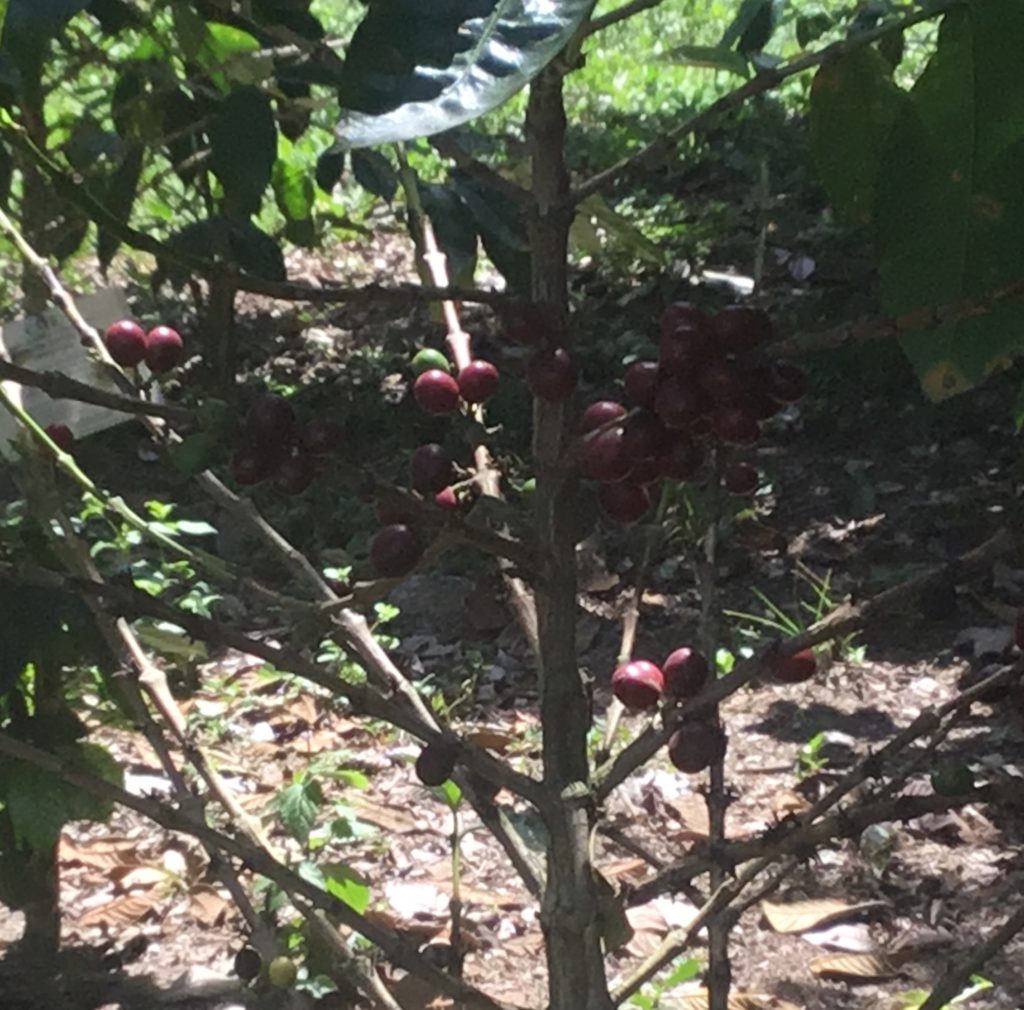
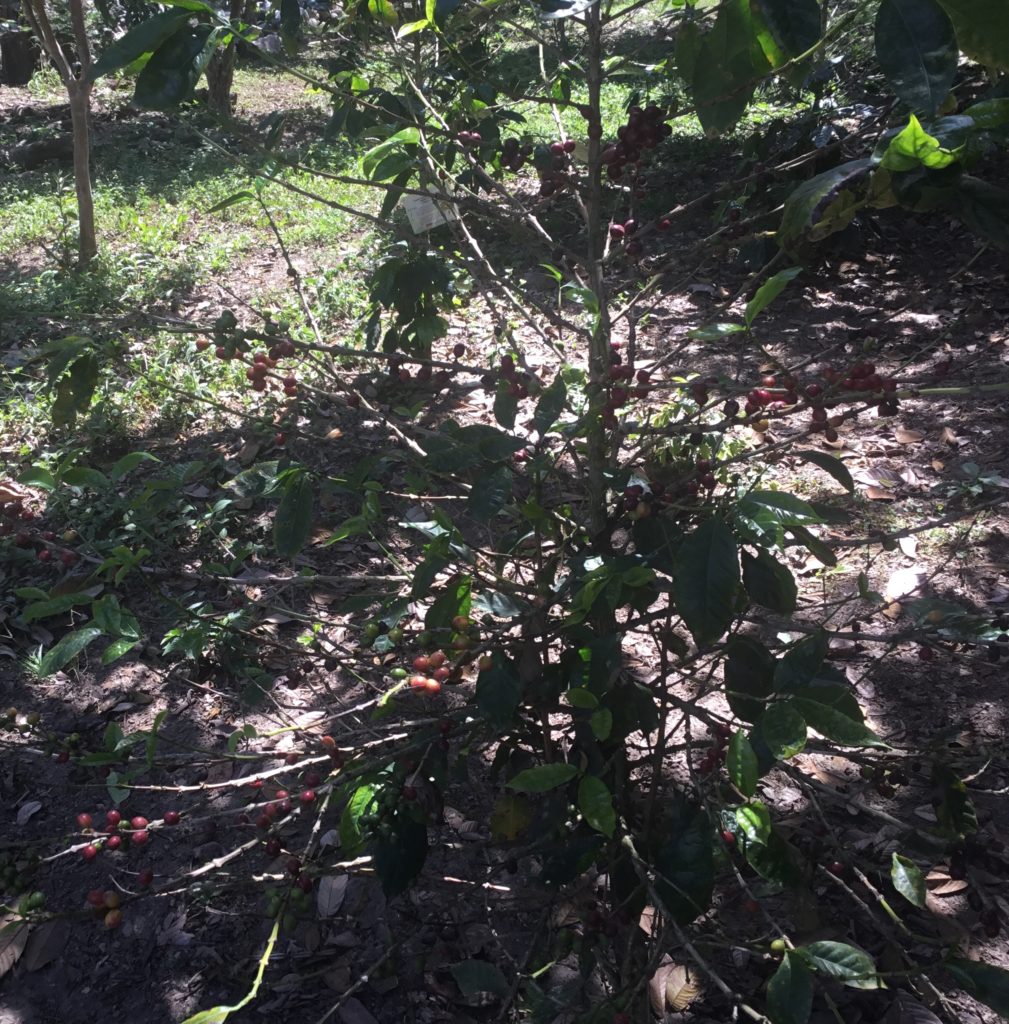
Many land owners here grow coffee, whether it’s just for personal use or to sell, because the area is perfect for the growth of the beloved tree. Also a little bit of trivia to add to this information, is the soil conditions create a bean which is pH balanced, so there is no concern for the acidic value being too high. Bonus!!! There is a lady from Canada who owns property here and she transports both the raw and roasted beans home with her. It was she who explained about the pH balance. Must be kind of difficult to go back to store bought coffee when you can roast your own I should think.
It is labour intensive, as you can imagine, to process start to finish. I think the wholeJuan Valdez image of the happy bean picker might just be good propaganda, letting us think it’s done for love. That being said, It’s possible the land owners love the process, but the workers? – maybe not so much.
After harvesting it is milled to remove the bark or peel, then it is washed and dried. After it has been dried, it is ready to toast and grind. Voila, you have the freshest cup of coffee possible. Those who grow for personal use, just use their oven to roast the beans. For the plantations that sell coffee for their business, the workers put in an 8 hour day, picking then cleaning and bagging. At this point it is either sold or roasted, then sold. To obtain workers, sometimes the owners will host work-always to do the job. I had not heard of this before, so I had it explained to me by people who use them here to help with their farm (not for coffee). For those of you who, like me who do not know about work-awayers, I will explain as best I can. It’s pretty simple really – people who want a cheap vacation, or a chance to travel for basically the cost of airfare, will apply for work in exchange for lodging and one meal per day. Depending on the place you work, because there is every type of job experience imaginable, you may get more meals, or your accommodation may be shared. You mainly work 5 hours per day and then the rest of the day is yours to do as you please. It is pretty much a win/win for everyone providing the accommodations are reasonable, good meals, etc and good, fair employers. On the other hand, the workers may not pull their weight, not providing acceptable exchange. So it can be a bit of a gamble.
If it works out, the workers are not paid, and basic accommodations are met. If paid employees are used, meaning locals, they are paid $10.00 to $12.00 per day. This is not much money in anyone’s world. The cost of living is pretty cheap here, but not that cheap. If the coffee is not shade grown, then the workers are out in the hot sun for those 8 hours a day. When you are moving, walking, or working here, sun or not, you are sweating in moments from the humidity and heat., so it would be a long, hard day.
A bag of local grown coffee here is on average about $7.00/pound US dollars, and it is primarily organically grown. In Canada I paid on average $15.00/pound for organic, shade grown, fair trade coffee. Now that I am living here, I have to wonder if “Fair Trade” exists. The coffee I bought was not from Ecuador, so I will not know for sure if my good intentions were correctly applied. Perhaps it was as much propaganda as Juan Valdez, but I do hold out hope that in other countries, where the majority of coffee supplied to the world comes from, these practices do occur.
Everything is suggestive in the end. Is there such a thing as organic truthfully? I think it would be impossible to validate because there are still so many farmers who spray and the chemicals travel with the wind and in the ground water. At the very least, those who grow organic are not adding to the problem of unsustainability, and it is those I support, doing my small part for a better future.
**I find it interesting to consider, that the “weeds” which we do our best to destroy with chemicals, can actually be the cure for the illnesses caused by those same chemicals. The bugs, birds and small rodents we kill as collateral damage with the sprays are often the ones which would eliminate the destructive insects. Food for thought……
0 Comments